By Jamie Curry
I talk about flood insurance with nearly every buyer and seller I work with here, since it's simply part of owning property on a barrier island. Boca Grande's location makes this a genuinely different conversation than it would be almost anywhere inland, and a few specific details matter more here than a generic flood insurance overview would suggest. Here's what I think every Boca Grande homeowner should actually understand.
Key Takeaways
- Standard homeowners insurance never covers flood damage, here or anywhere in Florida
- Much of Boca Grande falls into VE zones, the highest-risk flood designation that exists
- The NFIP's coverage caps fall far short of rebuild costs for most homes on the Island
- The NFIP's federal authorization requires periodic renewal, and that carries real uncertainty
Why Nearly Every Boca Grande Property Needs Flood Insurance
Flood damage is never covered by a standard homeowners policy, which means separate flood insurance is essential here, not optional. Properties in FEMA-designated Special Flood Hazard Areas are required to carry flood insurance if they have a federally backed mortgage, and given Boca Grande's location, that describes a large share of the Island. Even homeowners who purchase in cash and aren't required to carry it should think carefully before going without.
Why This Matters So Much Here
- Standard homeowners policies exclude flood damage entirely, everywhere in Florida
- Federally backed mortgages on homes in high-risk zones require flood coverage
- Cash buyers aren't required to carry it, but the exposure doesn't disappear
- Flood risk here is shaped by both storm surge and the Island's low elevation
Understanding VE Zones and What They Mean Here
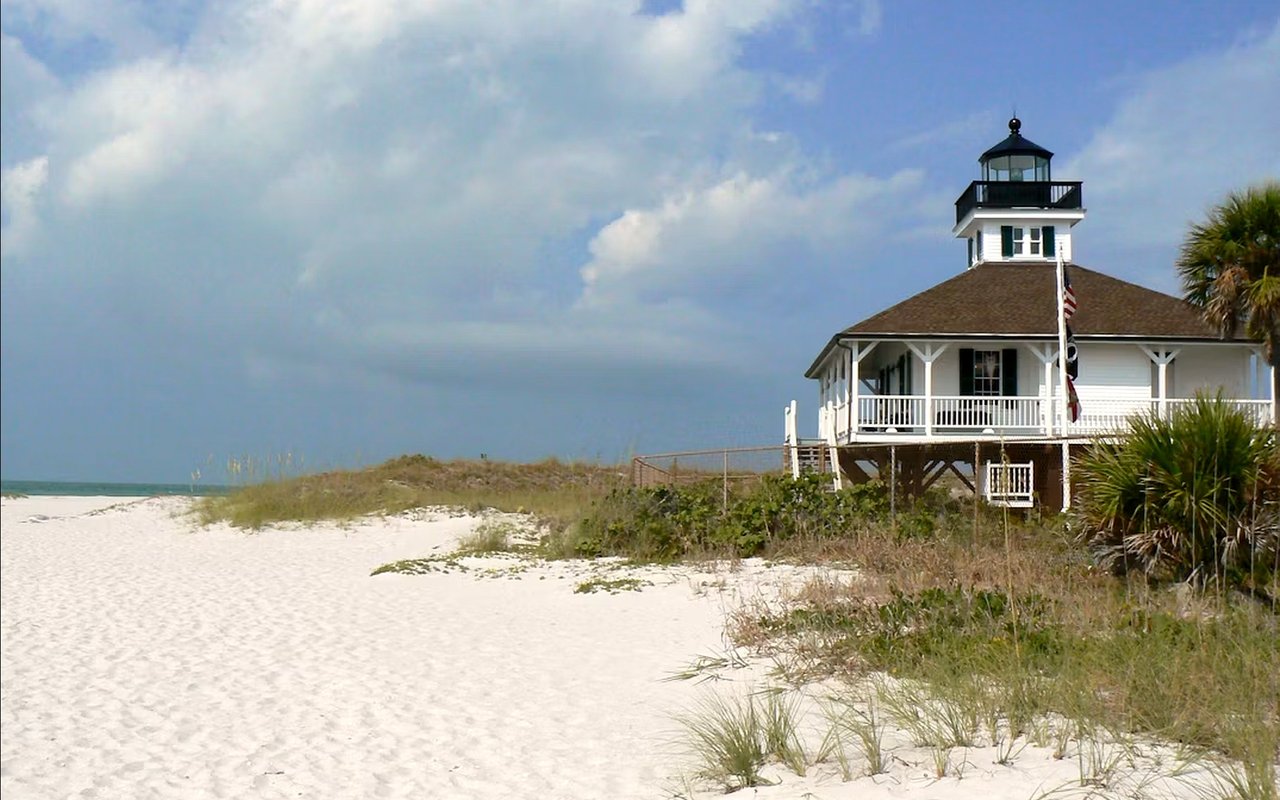
Zone VE is the most severe flood zone designation that exists, reserved for coastal areas exposed to wave action in addition to standard flooding, and it's common in barrier island communities in Lee County specifically. Premiums in VE zones commonly run several thousand dollars a year or more, and building codes in these zones require homes to be built on pilings or with breakaway walls. Knowing whether a specific property sits in a VE zone, rather than a lower-risk designation, changes both the cost and the construction requirements involved.
What a VE Zone Designation Means
- The highest-risk flood zone classification, tied to wave action, not just flooding
- Common in barrier island communities throughout Lee County
- Meaningfully higher premiums than lower-risk flood zones
- Construction requirements like pilings or breakaway wall systems
The NFIP's Coverage Caps and Why Private Insurance Matters So Much in Boca Grande
The National Flood Insurance Program caps residential building coverage at $250,000 and personal property coverage at $100,000, regardless of what a home would actually cost to rebuild or replace inside. Given the value of homes here on the Island, those caps fall dramatically short for the vast majority of properties I work with, which is exactly why private flood insurance has become such an important option locally. Private policies can offer building coverage well above the NFIP's limit, along with features like loss-of-use coverage that the NFIP doesn't provide at all.
Why the Coverage Gap Matters Here
- The NFIP's $250,000 building cap and $100,000 contents cap apply regardless of actual rebuild cost
- Boca Grande's home values mean these caps are rarely sufficient on their own
- Private flood insurance can offer building coverage well beyond that limit
- Some private policies include loss-of-use coverage the NFIP doesn't offer
How Risk Rating 2.0 Changed the Way Premiums Are Calculated
FEMA fully implemented a new pricing system called Risk Rating 2.0 in 2023, which prices policies based on property-specific factors like distance to water, elevation, rebuild cost, and flood frequency, rather than flood zone maps alone. For a lot of Florida homeowners, this has meant steady annual increases, though by statute those increases are generally capped at roughly 18 percent per year until a policy reaches its full risk-based rate. Understanding that your premium may still be climbing toward its true rate is worth knowing, especially when comparing costs against a private policy.
What Risk Rating 2.0 Changed
- Pricing based on specific property factors, not just flood zone maps
- Distance to water, elevation, rebuild cost, and flood frequency all factor into the premium
- Annual increases generally capped at roughly 18 percent until reaching full rate
- A policy's current premium may not yet reflect its eventual, fully phased-in cost
Staying Aware of NFIP's Reauthorization Status
The NFIP doesn't have permanent federal authorization, and Congress has to periodically renew it, with the current authorization set to expire on September 30, 2026. The program has actually been reauthorized through short-term extensions more than thirty times since 2017, so a lapse wouldn't be unprecedented, but it can still temporarily prevent new policies from being written, which has stalled real estate closings before. I keep a close eye on this timing for any client with a closing that depends on a new flood policy.
Why This Timing Is Worth Watching
- The NFIP's authorization must be periodically renewed by Congress
- The current authorization is set to expire September 30, 2026
- A lapse doesn't cancel existing policies, but can pause new ones being written
- This has caused real estate closings to stall in the past when timing overlaps
FAQs
Do we really need flood insurance if we're paying cash and there's no lender requiring it?
I'd still recommend it, honestly. The risk doesn't go away just because there's no lender requiring coverage, and a flood loss without insurance can be devastating financially.
Is private flood insurance actually better than the NFIP here?
It depends on the property, but for higher-value Boca Grande homes, private coverage is often necessary just to get close to full rebuild value. I always recommend comparing both options directly.
Should we be worried about the NFIP's authorization expiring later this year?
It's worth being aware of, especially if a closing is scheduled close to that date. I keep track of this for clients and plan around it whenever it's relevant to a specific transaction.
Contact Jamie Curry Today
Understanding flood insurance is a real part of buying or selling on the Island, and I walk every client through exactly what it means for their specific property. I'm happy to talk through what coverage makes sense before you're under a tight closing deadline.
Reach out to me, Jamie Curry, and let's talk through what you need to know about insuring a home in Boca Grande.
Reach out to me, Jamie Curry, and let's talk through what you need to know about insuring a home in Boca Grande.