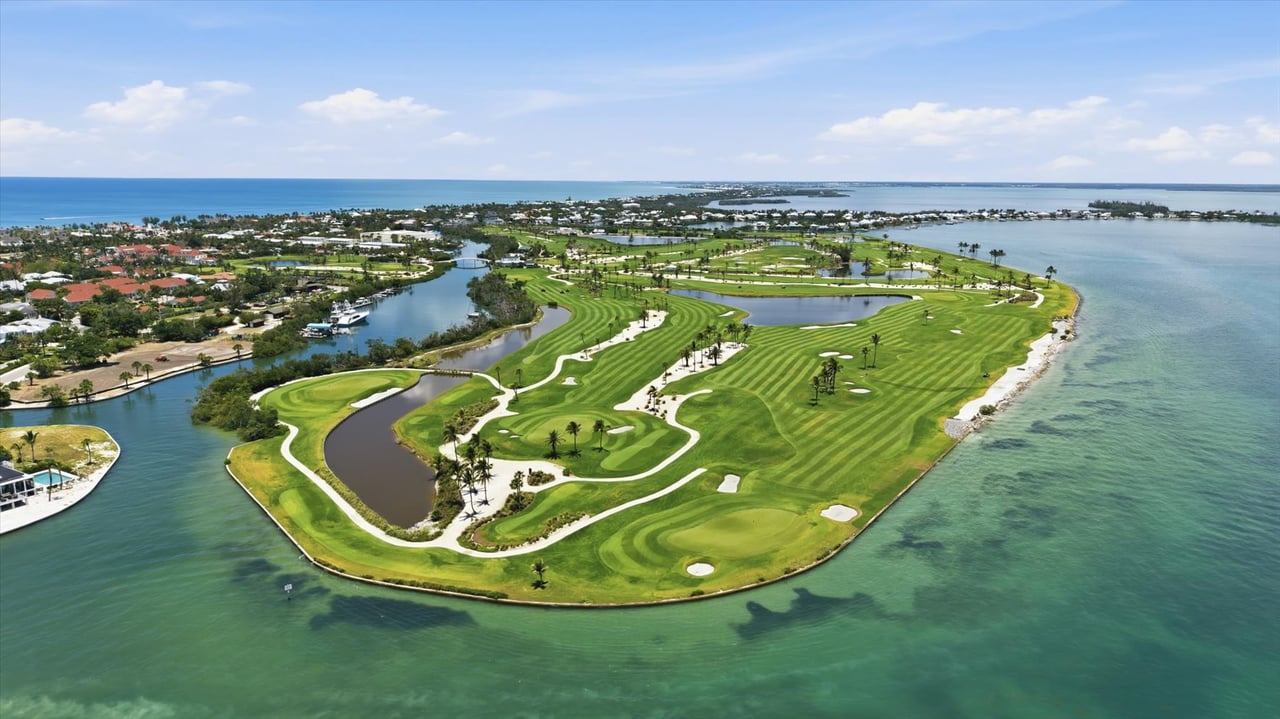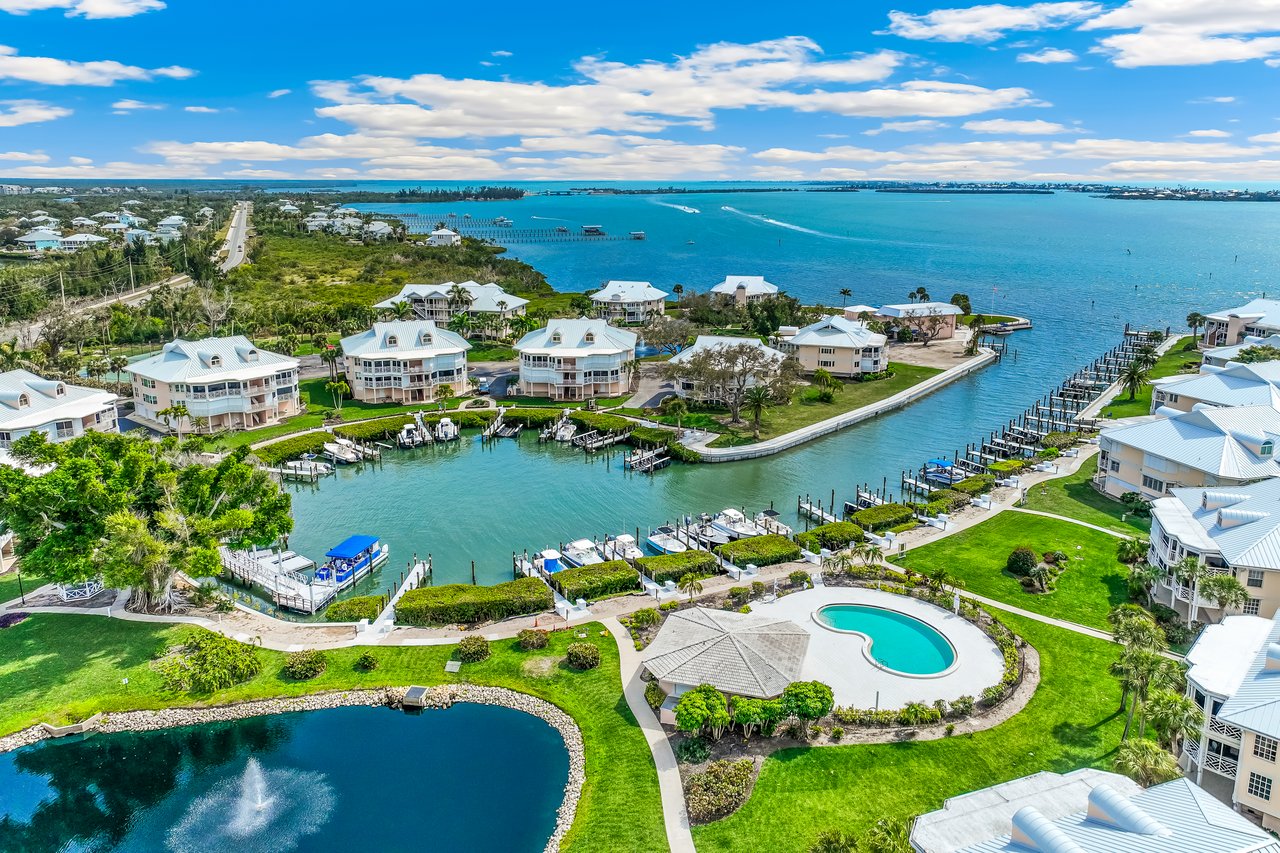
Boca Grande Isles closed homes at $1,434 a square foot in the year ending January 2026. That figure sits well above what nearby Golden Beach closed at over its own trailing twelve months through April 2026, where the price per square foot came in at $878. On paper, that gap looks like exactly what a guarded, deeded-waterfront enclave should produce: a premium buyers pay for exclusivity, and a number that should give sellers more room to hold their price.
It does not work that way. Over that same trailing year, Boca Grande Isles homes sold at 87 percent of list price. Island-wide, sellers were closing at 93 percent of list in the first quarter of 2026. The neighborhood asking the most per square foot gave back more of its number at the table than the broader Gasparilla Island market did, and it did so while moving faster, not slower. The average Boca Grande Isles sale took 66 days. The island average for Q1 2026 was 76.
That combination, a premium price per foot, a wider spread between ask and sold, and a shorter time on market, is not a contradiction. It is what a very thin market looks like once you know where to check.
The Trailing Year in Boca Grande Isles
Five homes changed hands in Boca Grande Isles over the twelve months ending January 2026. Average asking price came in at $7,130,000, and the average sale closed at $6,190,000, an 87 percent list-to-sold ratio. At $1,434 a square foot, those homes traded near the top of what any single-family segment on the island commands, and they did it in an average of 66 days.
Five transactions is not a large sample, and in most markets that would be a caveat. In Boca Grande Isles it is closer to the entire story. The neighborhood is capped at 123 platted single-family waterfront lots. There is no condo building or townhome section absorbing overflow demand and no smaller unit type offering a lower rung on the price ladder. Every buyer who wants in is competing for a piece of the same fixed 123, and in a typical year only a handful of those pieces change hands at all.
Setting That Against the Rest of the Island
Comparing a five-sale enclave to island-wide figures needs some care, since different reporting windows use slightly different methods and periods. Still, the pattern holds across the sources available for the same general stretch of 2026. Q1 2026 island-wide data put the average sale-to-list ratio at 93 percent against 76 average days on market, with 117 homes active and 14 pending. By July 2026, island-wide inventory had climbed to roughly 9.7 months of supply, a level that favors buyers rather than sellers across the broader market.
Boca Grande Isles moved through its handful of 2026 sales faster than that broader pool, not slower, even as it gave up more ground on price. A buyer comparing neighborhoods by scanning median prices alone would miss this entirely. The number that actually separates Boca Grande Isles from the rest of the island isn't the price tag. It's the gap between what a seller asks and what a seller actually accepts.
What Twenty-Five Years of Turnover Does to a List Price
Divide those five annual sales into the fixed pool of 123 lots and you get a turnover rate of roughly 4 percent a year. At that pace, the entire neighborhood changes hands only once every quarter century or so.
That scarcity is not a marketing line. It's a mechanical fact about how price gets set. In a liquid segment of the market, a seller pricing a new listing can look at three or four closed comps from the past few months, in a similar style and size, and set an ask that a buyer's own comp search will largely confirm. In Boca Grande Isles, that comparison set often doesn't exist in any given year. A seller pricing a deepwater canal home behind the guard gate may be working from a sale that closed eighteen months earlier, or from replacement cost, or from what a similar house asked for rather than what it actually sold for. The list price becomes an opening position more than a market-tested number.
Buyers who specifically want Boca Grande Isles already know what they're after: deeded waterfront, true deepwater canal access, and a controlled entry point rather than the open streets of the Village. When one of the 123 lots comes up, that buyer moves quickly, because there is no meaningful backup inventory to wait for. But the same buyer also knows the seller has no second bidder standing behind them. Few annual transactions means few competing offers on any single listing, and a negotiator who understands that dynamic has real room to work the number down even on a fast timeline. Short days on market and a lower list-to-sold ratio are not opposing signals here. They are two faces of the same thin market.
What the Guard Gate Fee Actually Covers
Current HOA dues in Boca Grande Isles run from $1,650 to $2,548, funding common area maintenance, the community's private roads, and 24-hour guarded security at the gate. That fee is what sustains the very feature that makes the enclave a distinct product from the rest of Boca Grande: a private, controlled-access neighborhood rather than an open one.
It is worth being precise about what that fee does not do. It does not create a broader pool of comparable recent sales, and it does not protect a seller from the pricing consequences of a market with only a handful of annual transactions. The security and the scarcity are the same wall. Buyers pay for privacy and exclusivity. Sellers absorb the price-discovery cost of a segment where recent, similar comps are rare by design.
The Sunset Realty Thread Running Through Two Neighborhoods
Boca Grande Isles was platted in 1973, when Sunset Realty Corporation bridged over the bayou at 16th Street and laid out the community with its own incorporated homeowners' association. Four years earlier, the same developer had built Harbor Drive Waterways, the island's first canal-front and dockage community, tucked behind Miller's Marina in the heart of the Village with 83 platted lots of its own.
The two neighborhoods share a builder and a building era but not a market structure. Harbor Drive Waterways sits inside the Village, closer to daily foot traffic and a wider mix of home styles and price points. Boca Grande Isles sits behind its own gate, further from the Village center, with a single housing type and a fixed lot count that has not grown since the bridge went in over the bayou. That structural difference, more than any marketing language about exclusivity, is what produces the pricing behavior described above.
Golden Beach offers a third comparison point. Over its own trailing year through April 2026, three homes sold there at an average of $3,708,333, a 90 percent list-to-sold ratio, and 145 average days on market. It is a slower, less expensive canal-adjacent segment without the guard gate, and its numbers move differently for the same underlying reason: a different-sized pool of comparable buyers and sellers working with a different volume of recent trades.
A Short FAQ
Does a lower list-to-sold ratio mean Boca Grande Isles is overpriced? Not necessarily. It means list prices in a thin market carry less information about what a home will actually sell for, since sellers often have fewer recent, similar comps to price against. A wider gap between ask and sold reflects that uncertainty more than it reflects a mispriced home.
Why would a neighborhood with a bigger price concession still sell faster than the island average? Because the buyer pool for Boca Grande Isles specifically is smaller and more decided. Buyers who want deeded deepwater canal access behind a guard gate have usually already ruled out the rest of the island before a listing appears, so they move on it quickly once it does, even while negotiating the price down from where it started.
If you are weighing Boca Grande Isles against a canal-front alternative like Golden Beach or Harbor Drive Waterways, the number worth asking about is not the list price. It's how that specific list price was set, and how many comparable sales stood behind it. That is the kind of question a contract-side read of a listing answers faster than a portal search ever will, and it's the exact ground Jamie Curry works from with buyers and sellers moving through this stretch of Gasparilla Island's smallest waterfront market.